

Colorado Spas Embrace AI
Colorado has always been a haven for wellness seekers, and that pursuit of well-being is evolving. The state’s robust tourism industry and a generally health-conscious population are driving demand for innovative spa experiences. Now, a new wave of technology is beginning to reshape the landscape of relaxation: artificial intelligence. We're seeing spas move beyond traditional methods and incorporate AI to personalize treatments and enhance the overall experience.
It’s not about replacing the skilled hands of a massage therapist, but rather providing them with tools to be even more effective. This isn't a sudden shift either. The groundwork is being laid now, with wider adoption expected following the effective date of Colorado’s HB26-1139 on August 12, 2026. This legislation addresses the use of AI in healthcare, and its passage will likely encourage more spas to explore these technologies.
The promise of AI in massage is appealing: deeper relaxation, more targeted treatment, and a truly customized experience. It’s a compelling idea, and Colorado spas are among the first to start making it a reality. There's a real sense of excitement around this, but it’s important to understand what AI actually does in a massage setting. It’s a lot more nuanced than simply robotic arms doing the work.
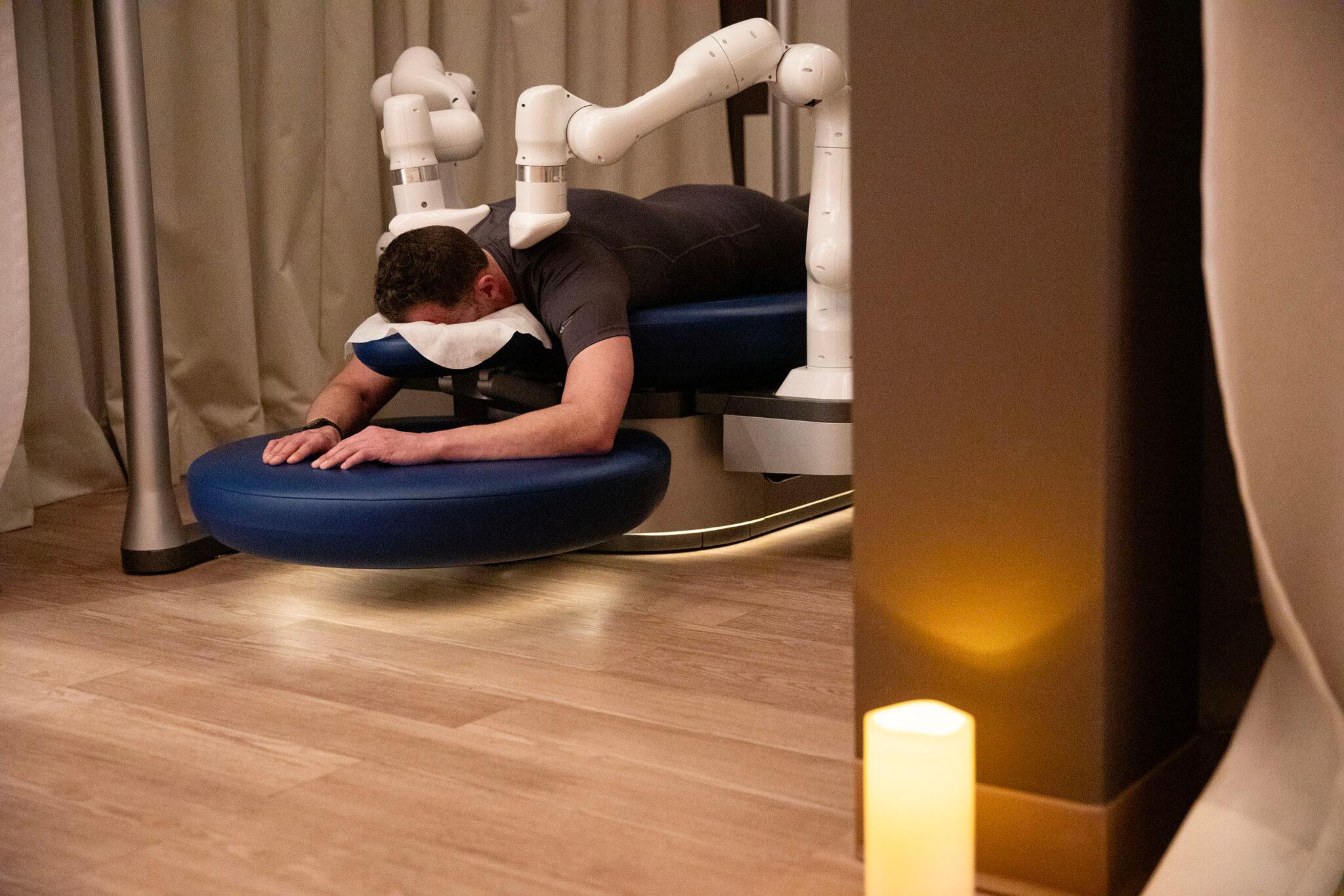
Beyond Robotic Arms: What AI Actually Does
The first image that comes to mind for many people when they hear “AI massage” is likely a robot performing the treatment. That’s not the reality, at least not yet. The current applications of AI in massage are focused on augmenting the therapist’s abilities, providing them with data and insights to deliver a more effective and personalized experience.
One key application is pressure mapping. Sensors, often embedded in the massage table or used as handheld devices, create a real-time map of muscle tension. This data isn’t just for show; it’s used to inform the therapist’s technique. Beyond that, AI is being used to personalize the environment – adjusting music and lighting based on a client’s biofeedback, creating a truly immersive experience.
AI-powered pre- and post-massage assessments are also emerging. These assessments collect data about a client’s pain levels, range of motion, and overall well-being. This information helps the therapist understand the client’s needs and tailor the treatment accordingly. The data collected is typically anonymized and used to improve treatment protocols over time.
It's about giving therapists superpowers, not replacing them. AI can analyze data far faster than a human, identifying patterns and potential problem areas that might be missed during a traditional assessment. This allows for a more targeted and effective treatment, ultimately leading to better outcomes for the client.
Pressure Mapping & Personalized Technique
Pressure mapping technology is arguably the most impactful current application of AI in massage. These systems use sensors to visualize the amount of pressure being applied to different areas of the body. The result is a heat map of muscle tension, displayed in real-time on a screen for the therapist. This isn’t just a visual aid; it provides quantifiable data.
How does this data help? It allows the therapist to identify areas of chronic tension that the client may not even be aware of. For example, a client might complain of lower back pain, but the pressure map reveals significant tension in their left shoulder. This could indicate a compensatory pattern, and the therapist can address it accordingly. It’s about treating the root cause, not just the symptoms.
AI algorithms analyze the pressure map data and suggest adjustments to technique, pressure, and focus areas. The AI doesn't tell the therapist what to do, it suggests possibilities based on patterns it has learned from thousands of other sessions. It's a collaborative process, with the therapist always in control. The technology is a tool, not a replacement for human judgment.
This level of personalization is a game-changer. Clients receive a treatment that is specifically tailored to their individual needs, based on objective data rather than subjective assessment. It’s a more scientific and effective approach to massage therapy.
Colorado Spas Leading the Charge
Several Colorado spas are already embracing AI-enhanced massage techniques. AI Cottage Massage in Arvada is one example, currently holding a 3.0 rating on Yelp (as of May 2026) and offering services that integrate technology into their treatments. They’ve been experimenting with pressure mapping and personalized music based on client biofeedback.
The Broadmoor in Colorado Springs is another spa exploring these technologies, though their implementation is currently more focused on data collection for research purposes. They’re using pressure mapping to study the effects of different massage techniques on muscle tension and pain relief. They haven't fully rolled out AI-guided treatments to the public, but are actively researching the possibilities.
St. Julien Hotel & Spa in Boulder is also experimenting with biofeedback-driven experiences. They utilize sensors to monitor heart rate variability and adjust lighting and aromatherapy accordingly. According to spa director Sarah Jenkins, “We’re seeing a significant increase in client satisfaction with these personalized experiences. It’s about creating a truly immersive and restorative environment.”
Remède Spa at The Ritz-Carlton, Bachelor Gulch is quietly integrating pressure mapping into their deep tissue massage offerings. While they don’t heavily advertise the AI component, therapists are using the data to refine their technique and provide more targeted treatment. It's a subtle, but effective, implementation of the technology. These spas represent just the beginning of a growing trend.
Biofeedback & Immersive Environments
AI isn’t just about what the therapist does; it’s also about creating an environment that promotes relaxation. Biofeedback sensors are playing an increasingly important role in this. These sensors monitor physiological data like heart rate variability (HRV), skin conductance, and even brainwave activity.
The data collected is used to adjust various elements of the spa environment in real-time. For example, if a client’s HRV indicates they are stressed, the AI might automatically dim the lights, play calming music, or release a relaxing aromatherapy scent. It’s all about creating a feedback loop that encourages relaxation.
The science behind this is solid. HRV is a measure of the variation in time between heartbeats. Higher HRV is generally associated with better health and resilience, while lower HRV is linked to stress and anxiety. By monitoring HRV, the AI can gauge a client’s stress levels and adjust the environment accordingly. Skin conductance, which measures sweat gland activity, is another indicator of stress.
Of course, there are ethical considerations. Data privacy is paramount, and spas must be transparent about how they collect and use this information. Clients should always have the option to opt-out of biofeedback monitoring. But when implemented responsibly, these technologies can create a truly transformative spa experience.
The Legal Framework: HB26-1139
Colorado’s HB26-1139, passed in 2026, addresses the use of artificial intelligence in healthcare, and it has significant implications for spas offering AI-enhanced massage services. The law focuses on ensuring patient safety, data privacy, and responsible AI implementation. It's a complex piece of legislation, but the core principle is to protect consumers.
A key provision of the law requires spas to obtain informed consent from clients before collecting and using their data. Clients must be clearly informed about what data is being collected, how it will be used, and who will have access to it. This is particularly important for biofeedback data, which can be considered sensitive personal information.
The law also establishes guidelines for data security. Spas must implement appropriate measures to protect client data from unauthorized access, use, or disclosure. This includes things like encryption, access controls, and regular security audits. Failure to comply with these requirements could result in penalties.
HB26-1139 becomes effective on August 12, 2026, and will likely drive a wave of adoption of AI in spas as businesses seek to comply with the new regulations. It’s a positive step towards ensuring that these technologies are used responsibly and ethically. Spas should consult with legal counsel to ensure they are fully compliant with the law.
- Informed Consent: Clients must be informed about data collection and usage.
- Data Security: Spas must protect client data from unauthorized access.
- Compliance: Failure to comply can result in penalties.
Future Trends: What to Expect
Looking ahead to 2027 and beyond, we can expect to see even more sophisticated AI technologies integrated into the massage and spa industry. More advanced biofeedback systems that monitor a wider range of physiological data are likely to emerge. We might also see more personalized treatment plans based on individual genetic profiles.
Integration with wearable devices is another likely trend. Imagine a massage tailored to your activity levels and sleep patterns, as tracked by your smartwatch or fitness tracker. The possibilities are endless. However, it’s important to remember that AI is a tool, and the human element will always be essential.
Amazon Finds: Enhance Your Home Spa
Want to bring some of the benefits of AI-enhanced massage into your own home? Here are a few products that can help you create a spa-like experience. A Theragun or Hypervolt massage gun ($200-$600) can provide targeted muscle relief. An aroma diffuser with essential oils ($30-$100) can create a relaxing atmosphere.
A weighted blanket ($80-$200) can help reduce anxiety and promote sleep. Noise-canceling headphones ($100-$300) can block out distractions and enhance relaxation. While consumer-grade biofeedback devices are still relatively limited, you can find heart rate variability monitors ($50-$200) that can provide insights into your stress levels.
Elevate Your Home Spa: AI-Inspired Relaxation Essentials

Bluetooth enabled for app-guided percussive therapy · 5th generation with enhanced motor and battery life · Targets muscle pain and improves circulation
This device brings professional-grade percussive therapy into the home, mirroring the advanced, targeted treatments found in AI-enhanced spa services.

500ml capacity for extended diffusion · 4 timer settings and 7 LED color options · Waterless auto shut-off for safety
This diffuser enhances the sensory experience of relaxation at home, creating an ambiance similar to the curated environments in advanced AI-powered spa treatments.

Made with 100% Lyocell Rayon for breathability · Quilted design with glass beads for even weight distribution · Designed for cooling comfort and relaxation
This cooling weighted blanket offers a deeply comforting and sensory experience, akin to the personalized comfort provided by AI-driven spa therapies.

Industry-leading noise cancellation technology · Bluetooth connectivity for wireless audio · Comfortable over-ear design for extended wear
These headphones create a personal sanctuary of quiet, complementing the immersive and distraction-free relaxation offered by AI-enhanced spa treatments.

Maximum blackout design for complete light blocking · Adjustable with detachable eye cups for customized fit · Zero eye pressure design for ultimate comfort
This sleep mask ensures deep, uninterrupted rest, mirroring the restorative benefits of advanced relaxation techniques found in AI-enhanced spa experiences.
As an Amazon Associate I earn from qualifying purchases. Prices may vary.


No comments yet. Be the first to share your thoughts!